
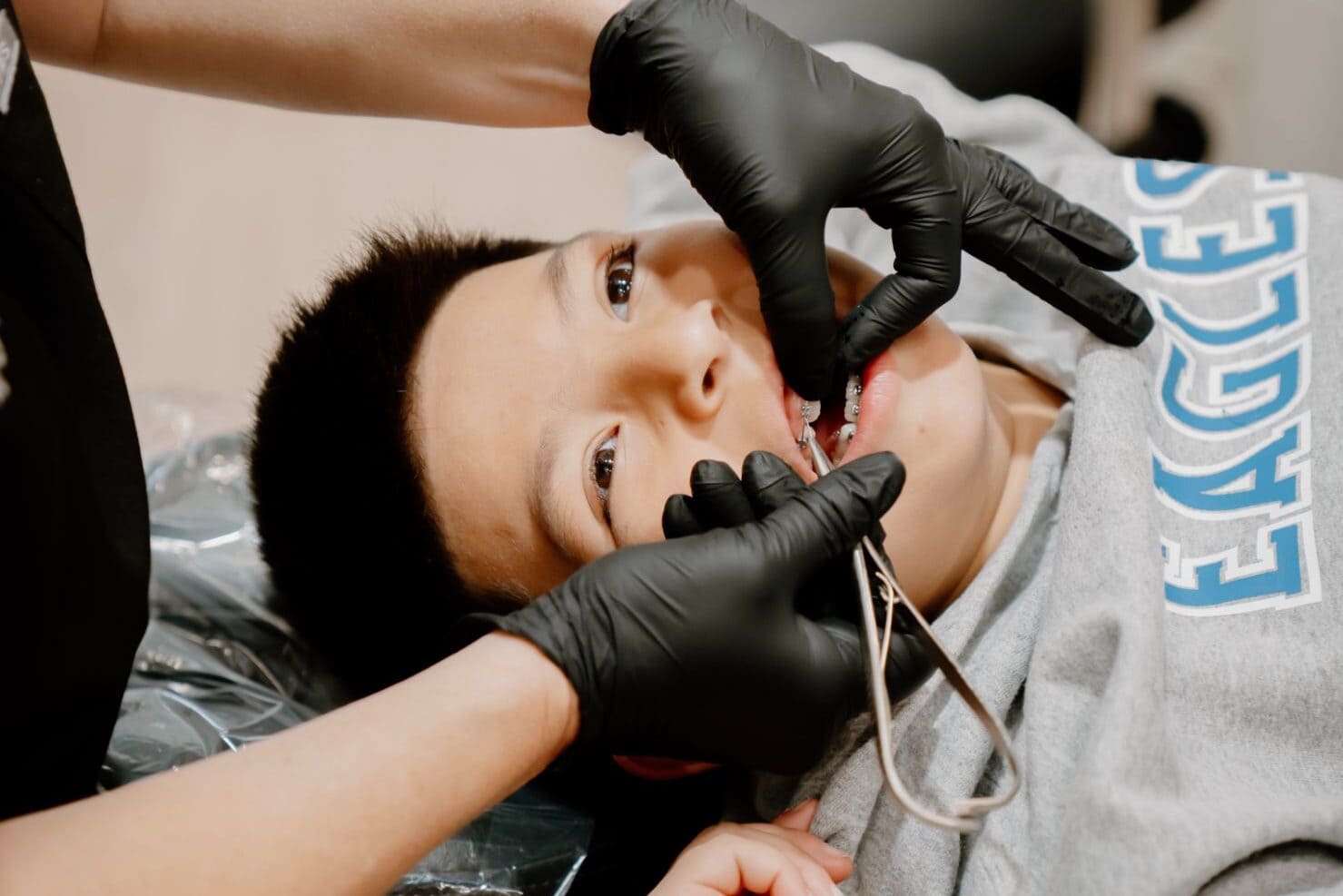
In many cases, yes. For growing kids with a narrow upper jaw, a palate expander can ease sleep apnea and breathing concerns by widening the palate and opening up the nasal airway. It's one of the more structural ways to address how jaw shape affects how a child breathes, both day and night.
What Is a Palate Expander and How Does It Relate to Breathing?
A palate expander is a custom orthodontic appliance that gradually widens the upper jaw to create more room in the mouth and nasal cavity. Because the roof of the mouth forms the floor of the nasal airway, a narrow palate can restrict airflow, contribute to mouth breathing, and play a role in sleep apnea and breathing concerns.
Expanders work best in kids and teens whose palatal bones haven't fully fused. During this growth window, gentle pressure can guide the two halves of the upper jaw apart, opening up space for the tongue, teeth, and nasal airway.
At Knecht Orthodontics, palate expansion is part of our airway-focused care. Rather than only straightening teeth, we look at how jaw structure affects breathing, sleep, and overall health. A narrow upper arch often shows up alongside crossbites, crowding, snoring, or chronic mouth breathing, all signs that your child's airway may need a closer look. Families across our community come to us with exactly these concerns.
How Does a Palate Expander Improve Airway and Breathing?
Widening the upper jaw is what helps a palate expander improve breathing, since it increases nasal cavity volume and reduces resistance in the nasal airway. With more room to breathe through the nose, kids often snore less, mouth breathe less, and sleep more soundly. Active expansion usually takes a few weeks, followed by several months of stabilization. Our board-certified orthodontist monitors each phase to keep things on track.
Here's what the process generally looks like:
- Custom fit. The expander is made to fit snugly against the upper teeth and palate.
- Gentle activation. A small key is used at home to turn the expander, applying light, controlled pressure.
- Gradual widening. Over several weeks, the two halves of the upper jaw move apart in tiny increments.
- Stabilization. The expander stays in place for several months so new bone can fill in and hold the result.
As the palate widens, the floor of the nasal cavity opens up too. That extra space can lower nasal airway resistance, which often means easier nasal breathing, quieter sleep, and fewer signs of obstructive sleep apnea in growing kids.
Palate expansion is often paired with braces or Invisalign as part of your child's smile journey. We'll walk you through every step so you and your child know exactly what to expect.
What Are the Benefits of Palate Expansion for Sleep Apnea and Breathing?
For the right candidate, a palate expander can do far more than make room for teeth. By addressing the structure of the upper jaw, expansion supports better breathing day and night.
How does expansion help sleep and breathing?
Common benefits include:
- Reduced sleep apnea symptoms. Research suggests palate expansion may lower the severity of obstructive sleep apnea in kids with narrow palates.
- Easier nasal breathing. A wider palate opens the nasal floor, which can cut down on chronic mouth breathing.
- Quieter nights. Less snoring. That often means better sleep for the whole household once expansion progresses.
- Better daytime focus and mood. When kids sleep deeply, they often show up to school more alert, calmer, and happier.
What about long-term oral health?
Expansion isn't just about tonight's sleep. It sets up healthier growth down the road too:
- Healthy tongue posture. A wider arch gives the tongue room to rest against the roof of the mouth, which supports jaw growth and airway development.
- More room for teeth. Expansion creates space that can reduce crowding and the need for extractions later.
According to the American Association of Orthodontists, early orthodontic evaluation around age 7 helps identify jaw and airway concerns when they're easiest to address. That's why we encourage parents to schedule an evaluation if they notice snoring, restless sleep, or open-mouth breathing in their child.
Palate Expander vs. Other Sleep Apnea Treatments
Sleep apnea care isn't one-size-fits-all. The best option depends on age, severity, and what's actually causing the airway to narrow. Here's how palate expansion compares to other common approaches:
| Treatment | How It Works | Best For | Addresses Root Cause? |
|---|---|---|---|
| Palate Expander | Widens the upper jaw to open the nasal airway | Growing kids with narrow palates | Yes, structural |
| CPAP | Delivers pressurized air through a mask during sleep | Adults with moderate to severe sleep apnea | No, manages symptoms |
| Oral Appliance Therapy | Repositions the lower jaw or tongue during sleep | Adults with mild to moderate sleep apnea | Partially |
| Adenoid/Tonsil Removal | Removes enlarged soft tissue blocking the airway | Kids with enlarged adenoids or tonsils | Yes, soft-tissue cause |
Each option has its place. CPAP and oral appliances are common adult solutions, while adenoid or tonsil removal often pairs with orthodontic care in kids. A palate expander stands out because it actually changes the jaw structure during the years it's easiest to do so.
In many cases, the right plan combines approaches. For example, a child may benefit from both tonsil treatment with their ENT and palate expansion with us. A board-certified orthodontist can help decide which mix fits best, and we're happy to coordinate with your pediatrician, ENT, or sleep specialist to build a plan that works.
How Much Does a Palate Expander Cost?
The cost of a palate expander depends on the type of expander used, how long treatment lasts, and whether it's a standalone appliance or part of your child's full smile journey. Insurance coverage, your child's specific airway needs, and case complexity also play a role. The most accurate way to know your investment is through a free consult, where we can review the details together.
A few factors that influence cost:
- Type of expander. Fixed, removable, and hybrid designs vary in price.
- Treatment scope. Expansion alone usually costs less than expansion combined with braces or Invisalign.
- Insurance. Some dental or medical plans help cover airway-related care, so it's worth checking your benefits early.
- Length of care. Longer stabilization or follow-up visits can affect the total amount.
We keep things simple & affordable with low monthly payment options, so families can plan ahead without surprises. Our goal is to make the numbers clear from the very first visit, so you always know what to expect at each stage of care.
Who Is a Good Candidate for Palate Expansion?
The best candidates for a palate expander are growing kids with a narrow upper jaw, especially when other signs point to airway concerns. Catching it early, before the palatal suture fuses, makes treatment faster, gentler, and more predictable. At Knecht Orthodontics, our board-certified orthodontist Dr. Kristen Knecht looks at the whole picture before recommending anything.
Your child may be a good candidate if they:
- Have a narrow palate, crossbite, or noticeable crowding
- Breathe through their mouth during the day or at night
- Snore, clench their teeth, or wake up frequently
- Seem tired, irritable, or unfocused despite a full night's sleep
- Have a high, vaulted roof of the mouth
- Were referred by a pediatrician, ENT, or sleep specialist
For adults, the palate has typically fused, so traditional expansion isn't usually an option. In those cases, surgically-assisted expansion or other airway therapies may be recommended. An airway evaluation helps determine the right fit for every age.
A board-certified orthodontist looks at jaw growth, tooth alignment, breathing patterns, and airway structure together to decide if expansion is the right call. We'll never recommend treatment your child doesn't need, and we'll always explain the reasoning behind every suggestion.
Frequently Asked Questions About Palate Expanders and Sleep Apnea
Can a palate expander cure sleep apnea?
In kids with a narrow upper jaw, a palate expander can significantly reduce, and sometimes resolve, obstructive sleep apnea symptoms by opening up the nasal airway. Results depend on what's causing the apnea. When a narrow palate is a major factor, expansion can make a real difference. When other issues like enlarged tonsils are involved, a team approach with your pediatrician or ENT works best.
How long does a palate expander take to work?
Active expansion usually takes a few weeks, during which a small key is used at home to turn the expander daily. After that, the appliance stays in place for several months to let new bone form and stabilize the result. Many families notice easier breathing and better sleep during or shortly after the active phase.
Do palate expanders hurt?
Most kids feel mild pressure or tightness right after turning the expander, and that soreness fades fast, usually within minutes. Some report a brief tingle or pressure at the bridge of the nose. Anything beyond that is rare. If your child is feeling sore, we'll adjust the plan and walk you through what to expect.
Can adults use palate expanders for sleep apnea?
Adults can benefit from palate expansion, but because the palatal bones have fused, a standard expander usually isn't enough. A surgically-assisted expansion, oral appliance therapy, or CPAP may be recommended instead. At Knecht Orthodontics, a board-certified orthodontist can evaluate your airway and refer you to the right specialist if needed.
Will a palate expander improve mouth breathing?
Often, yes. By widening the upper jaw, the expander opens up the nasal floor and lowers resistance in the nasal airway. Many kids move from chronic mouth breathing to comfortable nasal breathing as treatment progresses. Pairing expansion with myofunctional therapy can help reinforce new breathing habits.
If you've noticed snoring, restless sleep, or mouth breathing in your child, an airway evaluation is a great next step. Our team looks at the full picture, not just the teeth, because we serve our friends and neighbors with airway-focused orthodontics for the entire family. Come sit back, relax & get started with a free consult at our Mont Belvieu orthodontic office, no strings attached. We'd love to meet you and help your child breathe, sleep, and smile their best.